
Why Does the United States Still Use Miles Instead of Kilometers?
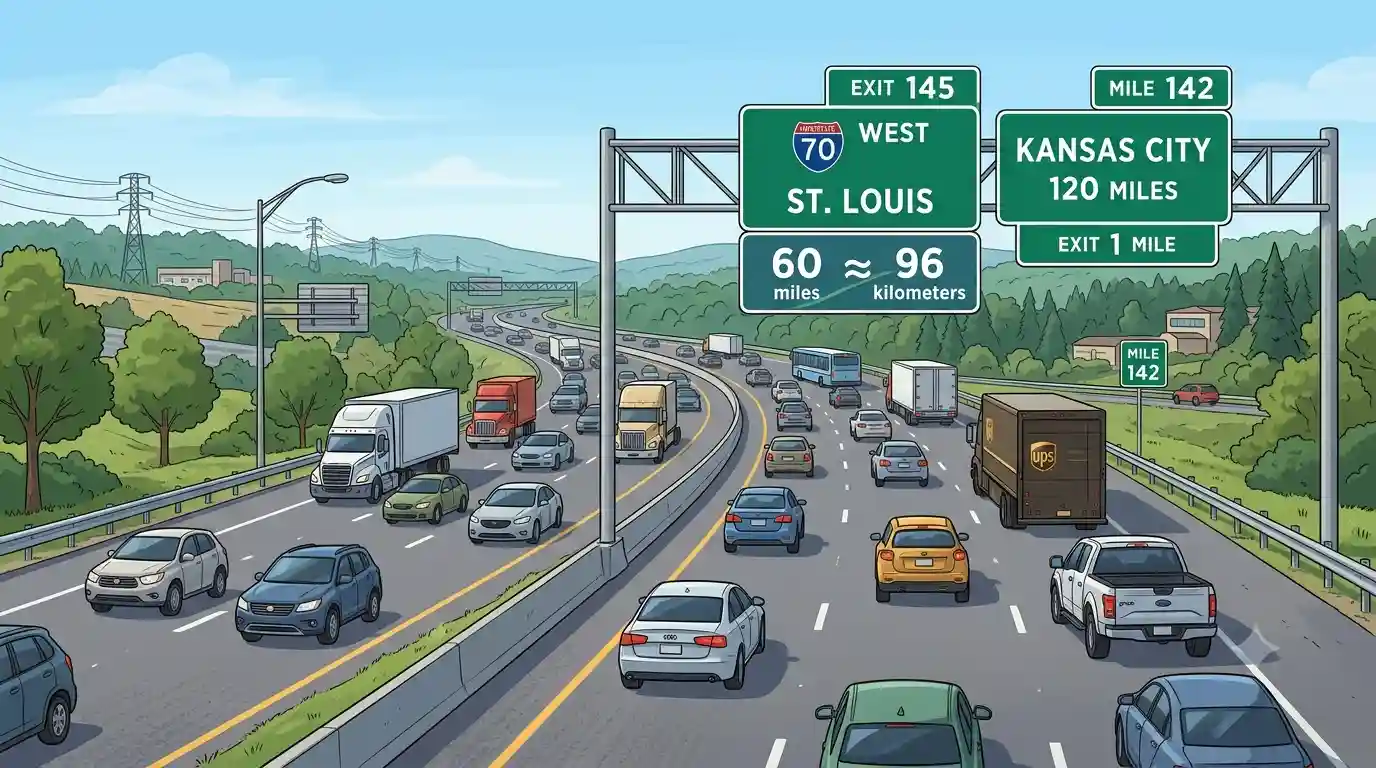
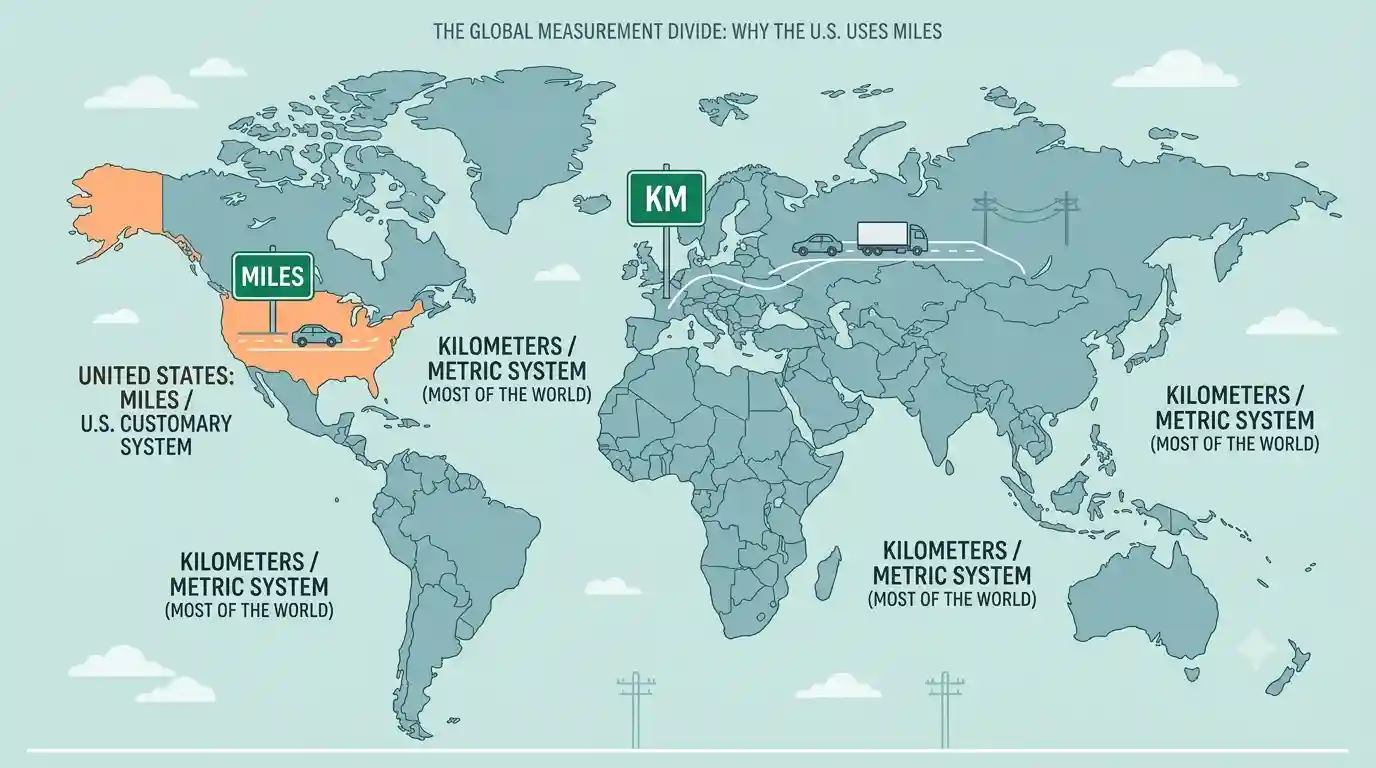
The United States uses miles for distance, while most countries use kilometers as part of the metric system. The reason is a combination of history, culture, politics, and the enormous cost of changing infrastructure. Although America uses metric units in science and many industries, miles remain the standard for everyday life.
Short History of Measurement Systems
Early English Units
The mile, foot, and inch were used throughout England for centuries. Early American settlers brought these familiar units to North America, where they became the foundation of everyday measurements.
The Metric System Appears
France introduced the metric system after the French Revolution during the late 1700s. It was based on scientific standards such as the meter and kilogram. During the 19th and 20th centuries, most countries adopted this simpler international system.
Why the U.S. Stayed with Miles
Existing Infrastructure
Road signs, highways, maps, speedometers, and legal documents were already based on miles. Replacing everything would require billions of dollars and years of work.
Public Familiarity
Americans grew up using miles in daily life. Driving distances, weather reports, real estate, and sports all relied on customary units.
Political Decisions
Congress legalized metric measurements in 1866 but never required Americans to stop using miles. Later metric campaigns remained voluntary.
Economic Considerations
Businesses continue using miles because American consumers expect them. Changing every product and transportation system would be expensive.
Did You Know?
Although Americans drive using miles, the United States widely uses metric units in science, medicine, engineering, manufacturing, and military operations.
The 1970s Metric Conversion Attempt
During the 1970s, the U.S. government encouraged metric conversion. Some federal agencies adopted metric standards, but the program lacked strong public support and mandatory enforcement. Because the transition would have been expensive and confusing, widespread adoption never happened.
Why Companies Continue Using Miles
- Customers expect road distances in miles.
- Vehicle dashboards show miles as the primary speed and distance measurement.
- Transportation and logistics systems throughout the country still rely on miles.
- Changing millions of signs and digital systems would cost enormous amounts of money.
Economic and International Impact
Using miles does not prevent international trade. American companies simply convert measurements whenever products are exported to countries that use the metric system. Engineers and scientists in the U.S. regularly work with both systems.
Why a Full Switch Is Unlikely
- The conversion cost remains extremely high.
- Most Americans are comfortable using miles.
- There is little political pressure for nationwide change.
- Metric units are already used where they are technically necessary.
Miles vs. Kilometers
| Measurement | Equivalent |
|---|---|
| 1 Mile | 1.60934 Kilometers |
| 1 Kilometer | 0.62137 Miles |
| United States | Miles are used for driving distances. |
| Most Countries | Kilometers are used for road distances. |
Everyday Examples
Road Signs
Highways and local roads across the United States display distances in miles.
Fuel Economy
Vehicle efficiency is commonly measured in miles per gallon (MPG).
Running Events
Many American races advertise distances in miles, while international competitions usually use kilometers.
Frequently Asked Questions
Find quick answers about why the United States still uses miles instead of kilometers, how metric units are used, and what the future may hold.
Yes. The United States promoted metric conversion during the 1970s. However, the program was voluntary and never resulted in a complete nationwide switch.
Yes. Kilometers and other metric units are commonly used in science, medicine, engineering, manufacturing, and many academic fields.
One mile equals approximately 1.60934 kilometers, while one kilometer equals about 0.62137 miles.
Standardizing measurements could benefit some industries, but replacing road signs, maps, vehicle systems, and infrastructure would require a very large initial investment.
Vehicles sold in the United States are designed primarily for drivers who use miles per hour. Many speedometers also include kilometers per hour as a secondary scale.
Yes. The metric system is legal in the United States, but it has never been made the only required system for everyday activities.
A complete change is possible but unlikely in the near future. It would require significant public support, political commitment, and funding.
People commonly use online converters, smartphone apps, GPS devices, or the simple approximation that one mile is about 1.6 kilometers.
Sometimes. Visitors from countries that use kilometers may need to convert road distances and speed limits while traveling in the United States.
