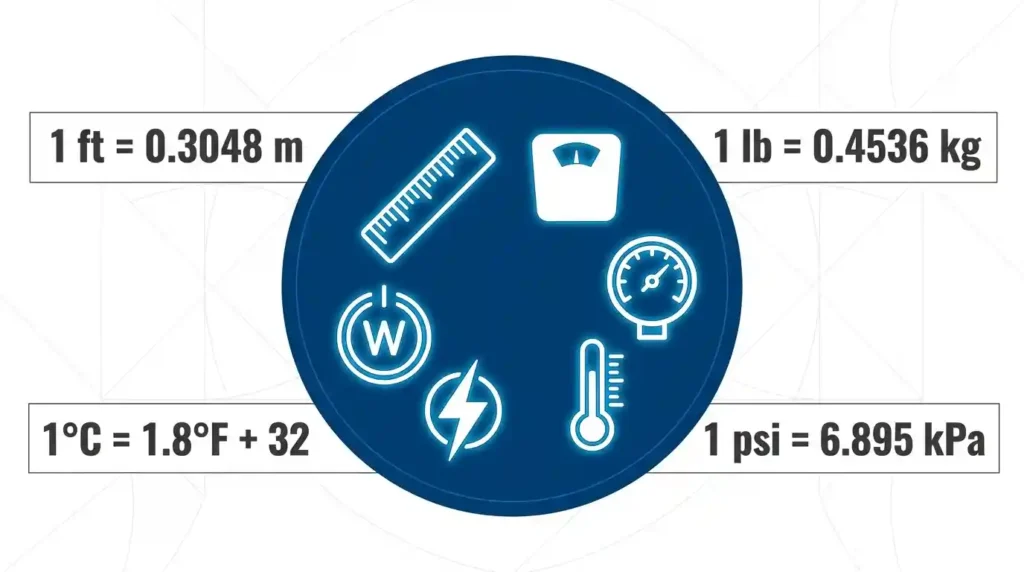
Pounds and newtons are commonly seen when working with weight and force, but they do not represent exactly the same physical quantity. Learn the difference between mass and force and how to convert pounds-force into newtons.
Why Do We Convert Pounds to Newtons?
If you have ever looked at a specification sheet, engineering document, physics problem, or product description, you may have encountered both pounds and newtons. Although these units can appear interchangeable in everyday conversations about weight, they actually describe different physical concepts.
The newton (N) is the SI unit of force, while the pound can refer to either a unit of mass or a unit of force depending on the context. This distinction is especially important when converting pounds to newtons.
Understanding the difference between mass, weight, and force makes these conversions much easier and helps prevent mistakes in scientific and engineering calculations.
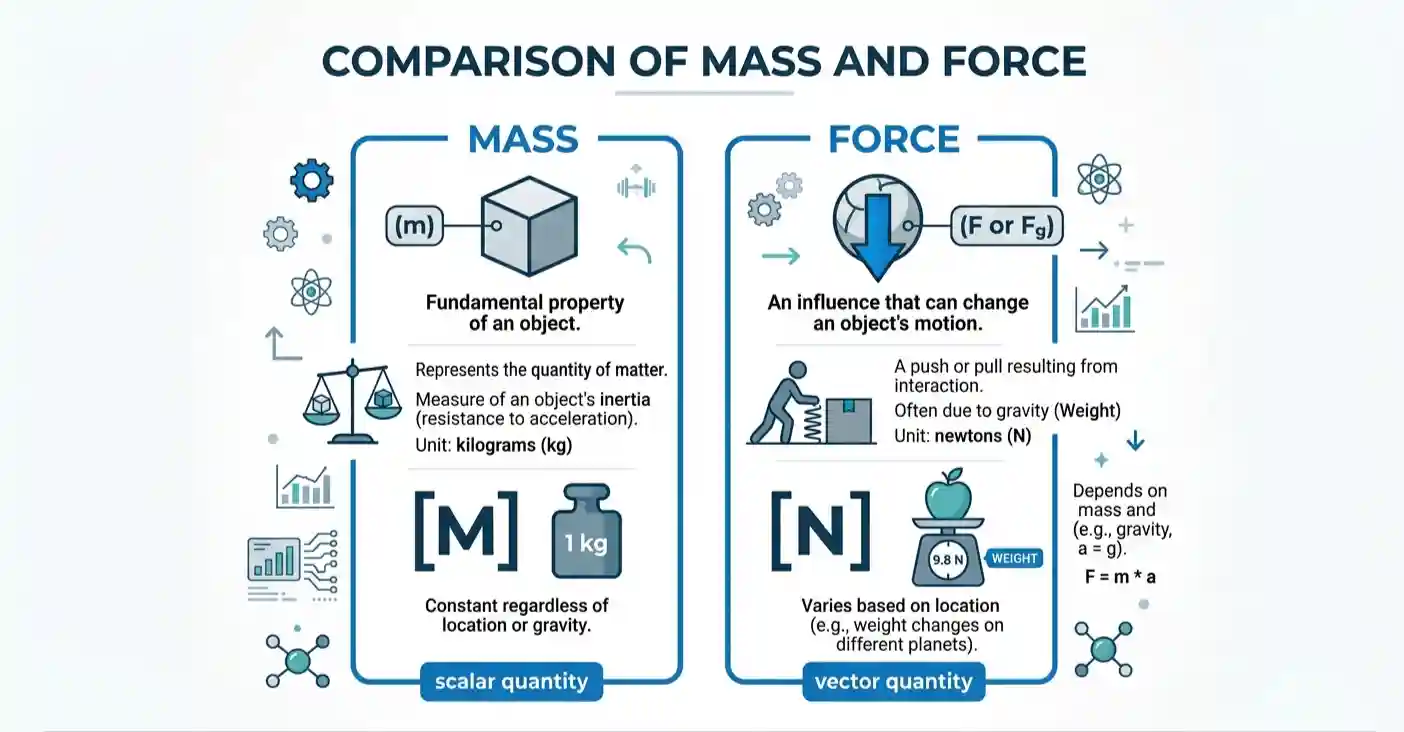
Mass vs. Force: What Is the Difference?
Mass
Mass describes how much matter an object contains. The SI unit of mass is the kilogram (kg). In everyday use, pounds can also be used as a unit of mass, particularly in the United States.
Force
Force describes a push or pull acting on an object. The SI unit of force is the newton (N). Force depends on both the mass of an object and its acceleration.
Important: A pound of mass and a pound-force are not the same thing. When converting pounds to newtons, you need to know whether the pound value represents mass or force.
What Is a Newton?
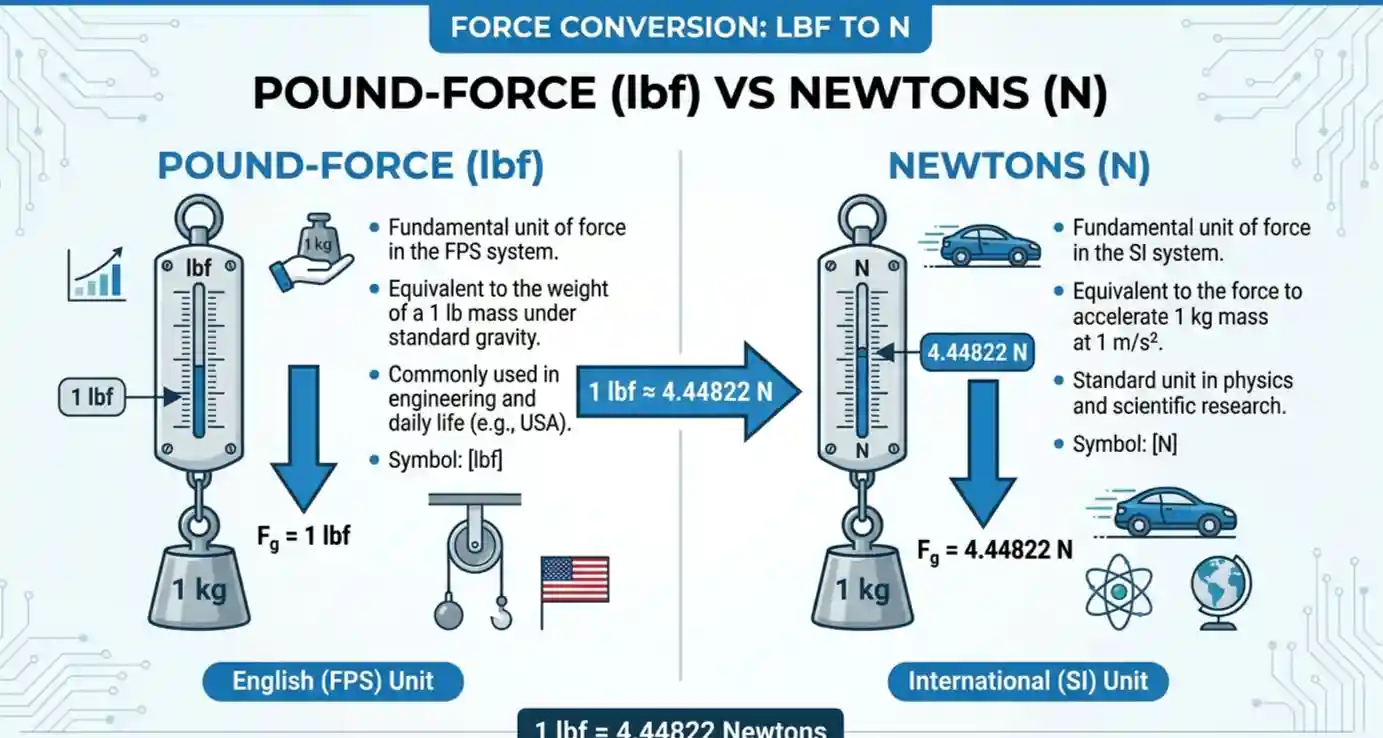
A newton is the SI unit used to measure force. One newton is defined as the amount of force required to accelerate a one-kilogram mass at a rate of one meter per second squared.
Force equals mass multiplied by acceleration.
In this equation, F represents force in newtons, m represents mass in kilograms, and a represents acceleration in meters per second squared.
What Does Pound-Force (lbf) Mean?
Pound-force, abbreviated as lbf, is a unit of force commonly used in the United States and some engineering applications. It should not be confused with the pound as a unit of mass.
Under standard Earth gravity, one pound-force is approximately equal to 4.44822 newtons.
Multiply a value in pound-force by approximately 4.44822 to obtain force in newtons.
How to Convert Pounds-Force to Newtons
To convert a force measured in pound-force to newtons, multiply the pound-force value by 4.44822.
For example, suppose a force is measured as 10 lbf. The conversion is:
10 lbf × 4.44822 = 44.4822 N
Therefore, 10 pound-force is approximately 44.48 newtons.
Pounds-Force to Newtons Conversion Table
The table below provides some common pound-force to newton conversions. Values are rounded for convenient reference.
| Pound-Force (lbf) | Newtons (N) |
|---|---|
| 1 lbf | 4.44822 N |
| 5 lbf | 22.2411 N |
| 10 lbf | 44.4822 N |
| 20 lbf | 88.9644 N |
| 50 lbf | 222.411 N |
| 100 lbf | 444.822 N |
Is a Pound the Same as a Newton?
No. A pound and a newton are not directly equivalent because they can refer to different types of physical quantities.
A pound can refer to pound-mass (lbm), while pound-force refers to force (lbf). Newtons are also a unit of force. Therefore, when converting a force from pound-force to newtons, the appropriate relationship is:
1 lbf ≈ 4.44822 N
If you are starting with pounds as a unit of mass rather than pound-force, the conversion requires additional information about acceleration or gravity.
How Weight Relates to Mass and Force
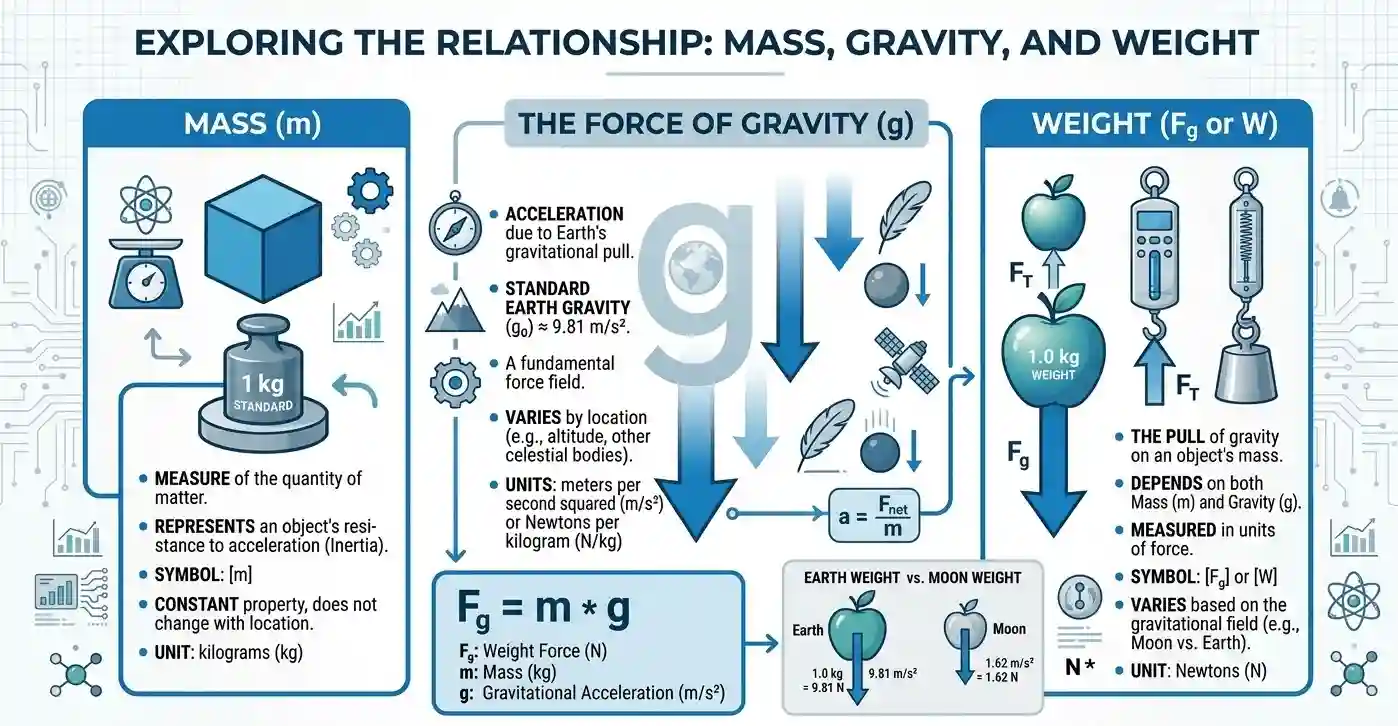
Weight is a force caused by gravity acting on an object’s mass. This is why mass and weight should not be treated as exactly the same physical quantity.
The relationship between weight, mass, and gravitational acceleration can be expressed as:
Weight equals mass multiplied by gravitational acceleration.
Near Earth’s surface, standard gravitational acceleration is approximately 9.80665 m/s². Because gravity can differ between locations and celestial bodies, the weight of an object can change even though its mass remains the same.
Where Are Pounds and Newtons Used?
Engineering
Engineers may encounter pound-force in specifications, mechanical calculations, load ratings, and older technical documentation.
Physics
Newtons are widely used in physics because they form part of the International System of Units (SI).
Product Specifications
Mechanical products, tools, equipment, and fasteners may list force ratings in either pound-force or newtons.
Science Education
Understanding the distinction between mass and force is important when studying Newton’s laws of motion and mechanics.
Need a Quick Pounds-to-Newtons Conversion?
Instead of calculating each conversion manually, use a pounds-to-newtons converter to quickly convert force values between the two units.
Use the Pounds to Newtons ConverterKey Takeaways
Pounds and newtons can both appear in discussions about weight and force, but they should not automatically be treated as equivalent units.
The most important distinction is between mass and force. Pound-mass (lbm) is a unit of mass, while pound-force (lbf) is a unit of force. Newtons are also a unit of force.
Remember: 1 pound-force is approximately 4.44822 newtons.
Understanding this distinction makes it easier to interpret technical specifications, solve physics problems, and perform accurate unit conversions.
Pounds to Newtons FAQs
One pound-force (1 lbf) is approximately equal to 4.44822 newtons (N).
To convert pound-force to newtons, multiply the value in lbf by 4.44822. The formula is N = lbf × 4.44822.
No. Pound-mass (lbm) measures mass, while pound-force (lbf) measures force. The two should not be confused when performing unit conversions.
Ten pound-force is approximately 44.4822 newtons because 10 × 4.44822 = 44.4822 N.
Weight is the force produced by gravity acting on an object’s mass. It can be calculated using W = m × g, where m is mass and g is gravitational acceleration.